We love sharing insights and tools to help our clients better cope with challenges and live their lives to the fullest.
Understand the neurobiology of depression and how your brain changes. Learn how an integrative approach to therapy and lifestyle can restore mental health.
Most couples wait 6 years to get help. A licensed therapist shares real scripts for asking your partner about therapy — for every scenario, including "no."
Stop the cycle of survival loops. Our expert guide on couples counseling for complex trauma explains the biology of healing and how to rebuild safe attunement.
Overcome intimacy barriers after trauma. Learn how trauma-informed sex therapy safely rewires somatic memory using proven EMDR, DBT, and somatic skills.
For many survivors of abuse, traditional "talk therapy" eventually hits a plateau. You may have spent years articulating what happened to you, deconstructing the abuser's tactics, and understanding your triggers intellectually.
People stay in abusive relationships not due to weakness, but due to a powerful biological phenomenon called a Trauma Bond. This occurs when the brain becomes "addicted" to the dopamine rush of reconciliation following the cortisol spike of abuse, creating a cycle that is as physically difficult to break as a chemical dependency.
San Diego offers many forms of mental health support—including private therapy, trauma care, community clinics, crisis lines, and online options. Having this range available can make the process of getting help feel less overwhelming. Find out what you need to know before you start exploring.
Finding a therapist in San Diego can feel overwhelming, and it’s completely understandable if you’re not sure where to start—especially when you’re already carrying stress, anxiety, or emotional pain. With so many options across the county, the process can feel confusing.
Recovery from abuse is a biological process—learn how to move beyond the "fog" of trauma and rebuild a life grounded in safety, clarity, and self-trust.
Leaving an abusive relationship is often the most dangerous time for a survivor. It is a period of intense transition where the abuser’s sense of control is threatened, often leading to a spike in volatile behavior. Because of this, "just leaving" is not a simple act of willpower—it is a strategic operation that requires careful physical, digital, and emotional preparation.
High-achievers are driven by ambition and the pursuit of excellence. While having drive and determination can lead to remarkable accomplishments, it can also take a significant toll on our mental health. The relentless pursuit of success can lead to stress, burnout, and a diminished sense of well-being.
“So, you just…talk?” This is a common reaction that many people have when thinking about therapy. Can “just talking” really be that helpful? While therapists may wish to defend the field as being more than “just talking”, I would like to offer a perspective that speaks to how powerful talking to someone can really be.
How we start our mornings can significantly impact our entire day. Establishing healthy morning habits not only energizes us but also sets a positive tone for our mental and physical well-being. Here's why prioritizing the following habits can help you set your day off to a good start.
Oftentimes, our resistance to leaving, or rather expanding our comfort zone, is merely due to our fear of failure. But we neglect to recognize the fact that we are already setting ourselves up for failure by refusing to try. Where there is no risk, there is no change.
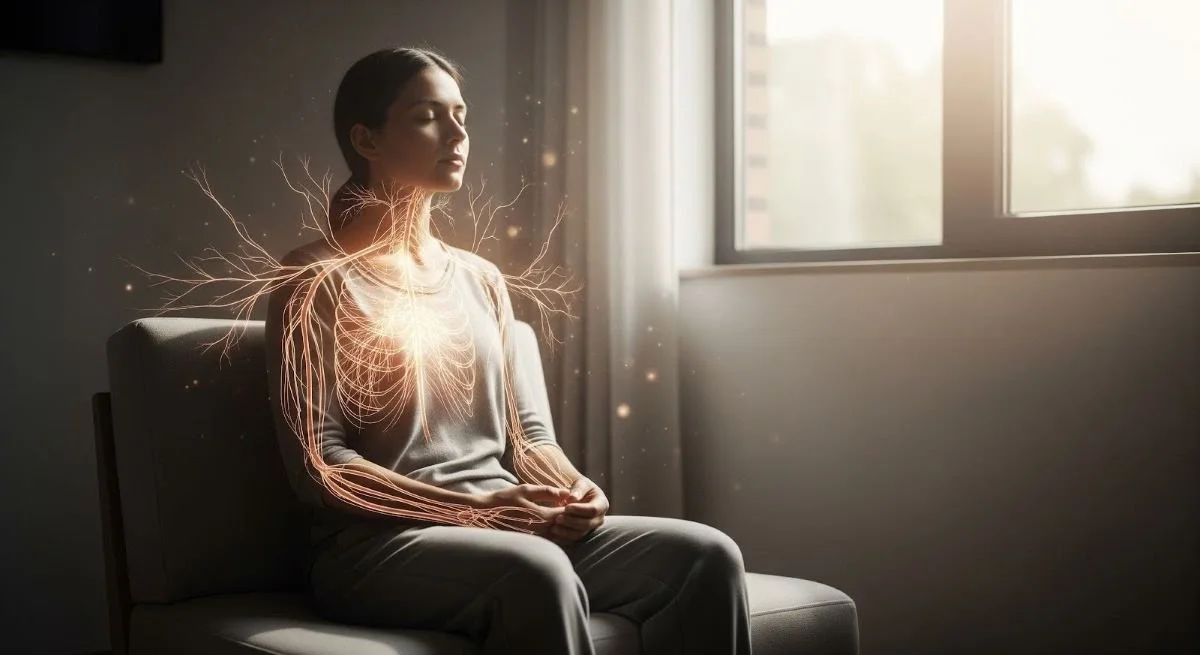
Humans are narrative creatures, and we make meaning of the experiences that we have in our lives. Our nervous system is no different. Our nervous system state (Ventral Vagal, Sympathetic, and Dorsal Vagal Shutdown) sends signaling to our brains which gets interpreted through story–the same is true for the state of our nervous system.
There are rare moments in life where it really feels like it’s you against the world. Moments when all you have is memories of the connections you’ve shared. Moments where you’ve gone through all the waves of emotion that come with grief, loss, and heartbreak.
The first thing we do when we are in pain is seek relief. That is our human instinct. The more intolerable the pain, the more urgently we seek for an instant solution. Our thoughts become consumed only with ideas of how we can stop the pain, and our fears come into their fullest form as we begin to worry that if we don’t find something to stop the pain, it will never stop.
It is so important to pay attention to our emotional experiences to properly grow and heal. Our emotions are a tool for us to get our conscious mind in touch with our subconscious experience. Oftentimes our emotions and bodies respond to an experience before we are even aware of what is causing those feelings. That being said, sometimes our immediate reaction to the more difficult emotions, such as loneliness or anger, can cause us to act impulsively.
There are so many mixed messages in our society, families and social groups that cause confusion on what healthy looks like. There are messages that being healthy means we have everything figured out, that we have no self-esteem issues, that we are able to manage our feelings and emotions without involving other people, or that we have our diet and weight under control.
It’s so easy to project our self esteem onto everyone and everything but ourselves. Sometimes this can look like needing excessive amounts of validation from others, basing our own value on our achievements, or deriving our confidence from our appearance. The problem with these examples is that they are all external. Having a high self esteem will never be sustainable as long as it’s coming from anywhere outside of ourselves.
Many of us were raised to be “polite.” Although there’s nothing wrong with being friendly and courteous to others, this idea has often translated to a sacrificial way of operating in relationships with others. Along with being polite, many of us were also taught to make sure we are considerate of other people’s feelings before we give any credit to our own and that it’s selfish to put ourselves first.
Many parents are finding it difficult to talk with their children about social media. The first thing you want to ask yourself before you confront your child with a conversation about social media is ‘do you understand the apps your child is using?’ If the answer is no, you should do some basic research about how these apps work. You can read articles about them or watch documentaries, but nothing beats making a profile and seeing how it works. You can make your own profile and add your child to see how they are using the app, or make up an entirely new persona and see how deep the rabbit hole goes.
With the recent release of “The Social Dilemma” on netflix, people have been looking at their social media use with a new eye. This documentary-drama raises many of the same concerns that whistleblowers at social media companies have been bringing up for years now. Common concerns have been centered on how social media changes our thoughts and in turn changes our behavior (similar to the connection that drives therapy outcomes: the thought-feeling-action cycle).
A growing number of recent graduates are experiencing “post-grad depression.” While there has been much written about depression during college, there isn’t a great guide to dealing with depression after college. We decided to look into it. In this post, we discuss some common symptoms, causes and solutions to post grad depression.
In modern life it is very common to become disconnected from the ones around us. When this disconnection is the result of being excluded by others, the effect on our mental health can be very serious. We may have experienced abandonment as children, with ghosts of our experience still haunting us. We may also be (or feel) abandoned as adults by our loved ones, whether that be by friends, family or romantic partners. In any of these cases, it is best to think of abandonment as a type of trauma.
The period after the birth of your first child is one of the most difficult for any relationship. In fact “67% of couples... reported a decline in relationship satisfaction after the arrival of the first baby. The decline typically shows up between six months (for women) and nine months (for men) after the baby comes home.”
Note: It’s our philosophy at Whole Wellness Therapy that knowledge is power, which is why we asked the therapists in our Sacramento-based practice about some of the common changes that couples face and what can be done to best deal with them. While this advice should help you better understand your situation, many people find benefit in talking with a licensed therapist who has experience working with the issues you struggle with.
Many people have experienced betrayal in some form or another, but very few think of it as a traumatic event. In fact, when most people hear the word “trauma” they immediately think of war veterans or people who have experienced physical or sexual abuse.
What are you looking for today?
Do a quick search…
Explore our services: